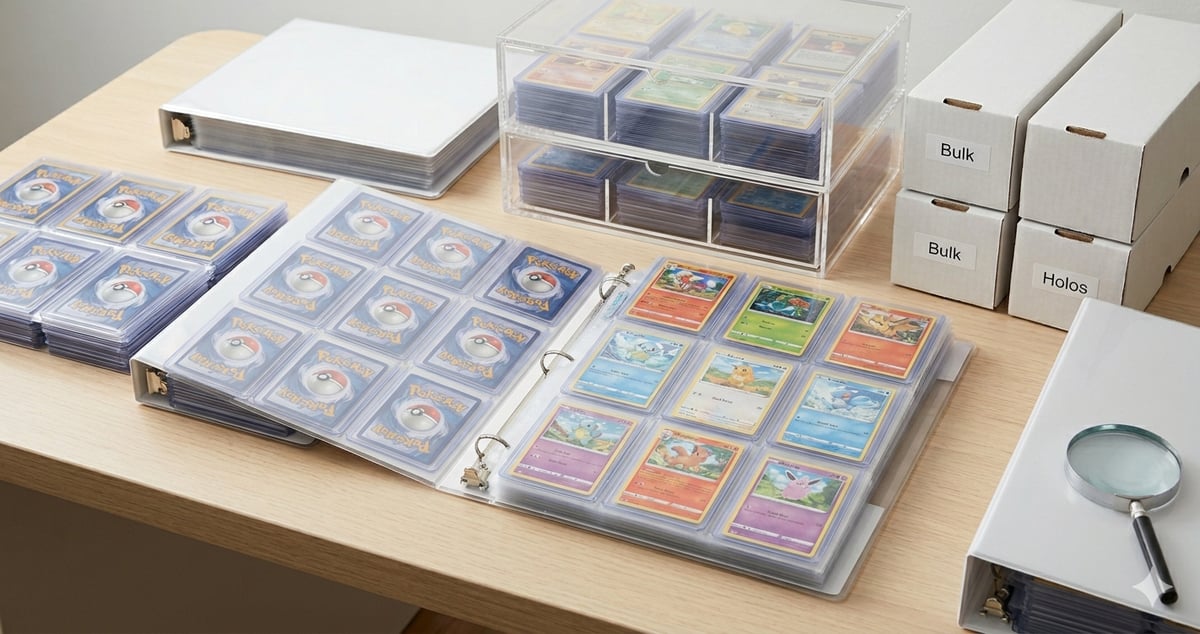
Whether you're a lifelong collector rekindling your passion or a newcomer drawn to the world of Pokémon cards, building a meaningful collection requires more than just purchasing cards. This comprehensive guide covers everything you need to know to collect smart, protect your investments, and enjoy the hobby to its fullest.
1. Start with Clear Collecting Goals
Before you purchase your first card, define what motivates your collecting:
- Nostalgia-driven: Collecting cards from your favorite generation or era
- Investment-focused: Building a portfolio of high-potential cards for appreciation
- Completionist: Pursuing full sets or specific series
- Casual enjoyment: Collecting cards you genuinely love without specific targets
Your collecting goals will shape your budget, storage needs, and purchasing strategy. Collectors who succeed long-term are those who know exactly what they're collecting and why.
2. Invest in Proper Storage and Protection
Card degradation is one of the biggest threats to collection value. Protect your cards properly from the start:
For Individual Cards:
- Sleeves: Use acid-free, archival-quality card sleeves. Never use cheap plastic sleeves that can damage cards over time.
- Top loaders: Store high-value cards in rigid top loaders with acid-free inner sleeves for maximum protection.
- Binders: Choose collectable binders with acid-free pages designed specifically for trading cards. Store them upright, not flat, to prevent wear.
For Storage Conditions:
- Keep cards in a cool, dry environment (ideally 60-70°F)
- Avoid direct sunlight, which causes fading
- Maintain humidity levels between 40-50% to prevent warping
- Store away from temperature fluctuations
Quality matters: Premium storage materials cost slightly more upfront but protect your collection's value significantly over time.
3. Learn Authentication Basics
Counterfeit cards are increasingly sophisticated. Protect yourself by learning to identify authentic Pokémon cards:
Key authentication markers:
- Check card stock weight and texture—authentic cards feel substantial
- Examine the print quality: authentic cards have crisp, clear printing with proper color saturation
- Verify the PSA, BGS, or CGC certification sticker for graded cards
- Review holofoil patterns: authentic holofoil has consistent patterns and proper reflectivity
- Check text clarity and alignment—counterfeits often have fuzzy text or misaligned elements
Consider using professional grading services for high-value cards. Services like PSA, BGS, and CGC authenticate cards while providing official grades that impact resale value.
4. Organize Your Collection Strategically
A well-organized collection is easier to manage, insure, and enjoy:
Organization approaches:
- By set: Group cards by release year and set number
- By rarity: Separate holos, reverse holos, and non-holos
- By condition: Sort by graded grades or visual condition
- By type: Organize by Pokémon type (fire, water, grass, etc.)
Maintain a digital inventory spreadsheet with:
- Card name and set information
- Condition assessment or grade
- Purchase price and current estimated value
- Acquisition date
This documentation is essential for insurance purposes and helps you track your collection's growth over time.
5. Source Cards from Reputable Sellers
Where you buy matters significantly:
Trusted sources:
- Licensed retailers with established reputations
- Official Pokémon Center store
- Graded card marketplaces with seller ratings and authentication guarantees
- Local card shops with community standing
- Established online marketplaces with buyer protection
Avoid:
- Heavily discounted cards from unknown sellers
- "Too good to be true" deals, especially on high-value cards
- Ungraded vintage cards without proper authentication
- Sellers without verifiable transaction histories
Building relationships with trusted local dealers often provides better value and authentic sourcing than random online purchases.
6. Understand Card Grading and Condition
Card condition dramatically impacts value. Learn the grading scale:
- Gem Mint (9-10): Near-perfect condition with minimal imperfections
- Mint (8): Excellent condition with only slight wear
- Near Mint-Mint (7): Very light wear, barely noticeable to casual inspection
- Near Mint (6): Light wear visible upon close inspection
- Excellent-Mint (5): Noticeable wear but still attractive
- Very Good (4): Significant wear but still complete
- Good (3): Heavy wear with multiple defects
- Fair (2) & Poor (1): Significant damage and wear
Professional grading services provide objective assessments that significantly increase card value for high-end pieces. For budget collections, accurate self-assessment prevents overpaying.
7. Avoid Common Collecting Mistakes
Learn from others' experiences:
- Buying without verifying authenticity: Always authenticate high-value cards before purchase
- Storing cards improperly: Cheap storage leads to expensive damage
- Chasing every new release: Focus on your specific collecting goals rather than impulse purchases
- Ignoring documentation: Keep purchase receipts and sales records for insurance and tax purposes
- Overcrowding storage: Cramped cards suffer more wear; give them breathing room
- Living in the past: Modern cards (2020+) have improved quality and can appreciate significantly
8. Build Community and Stay Informed
The Pokémon card community is vibrant and knowledgeable:
- Join local groups: Connect with collectors at card shops and hobby events
- Follow market trends: Keep up with card valuations and market movements
- Participate online: Engage with authenticity discussions and collecting tips
- Attend events: Pokémon tournaments, card shows, and hobby conventions provide networking and sourcing opportunities
- Read authentication guides: Stay current on counterfeiting techniques to protect yourself
9. Insure Your Collection
As your collection grows in value, proper insurance becomes critical:
- Document your collection with photos and inventory lists
- Get professional appraisals for high-value cards
- Add your collection to homeowner's or renter's insurance, or secure specialty collector insurance
- Update documentation annually as your collection evolves
Most standard homeowner's policies have limited coverage for collectibles, making specialized collection insurance essential for valuable collections.
10. Track Your Collection Digitally
Use modern tools to manage your portfolio:
- Digital inventory apps help track cards, grades, and values
- Price tracking monitors market changes and exit windows
- Portfolio management allows you to assess your collection's composition and rebalance strategically
CardTrezor offers collection management tools tailored to the Pokémon TCG community, helping you organize, value, and grow your collection intelligently.
Conclusion
Building a valuable, well-maintained Pokémon card collection requires intentional decisions across authentication, storage, sourcing, and organization. By following these tips, you'll protect your cards' condition and value while building a collection you'll enjoy for years to come.
Whether you're collecting for nostalgia, investment, or pure enjoyment, the key is starting right with proper fundamentals. Your future self—and your collection's value—will thank you for the care you invest today.